A robot that empties the metal printer
Honeywell’s metal printers are cleaned by hand. Our robot does it instead.
The problem, step by step
Honeywell prints metal parts with lasers. After every print, a person cleans up by hand:
Open the chamber
Unseal the box the part was printed in.
Vacuum the powder
Suck the loose metal dust off the part.
Lift the part out
Pull the fresh part free by hand.
Save the powder
Collect the used powder for the next print.
Where the money goes
Slow, costly and unsafe, on every single part.
-
30 to 60min
for each part, so the line waits.
GE Additive, AMFG 2023 -
$40 to $80
in labor for each part.
AMPOWER report 2022 -
15%
of parts, at worst, break when pulled out by hand.
ExOne, Additive Manufacturing Media
And the dust is a health risk: metal powders like Ti-64 and Inconel harm the lungs. AMPOWER report 2022
$360,000+
a year in hand cleanup, for 5,000 prints. Team estimate from the project deck
How our robot works
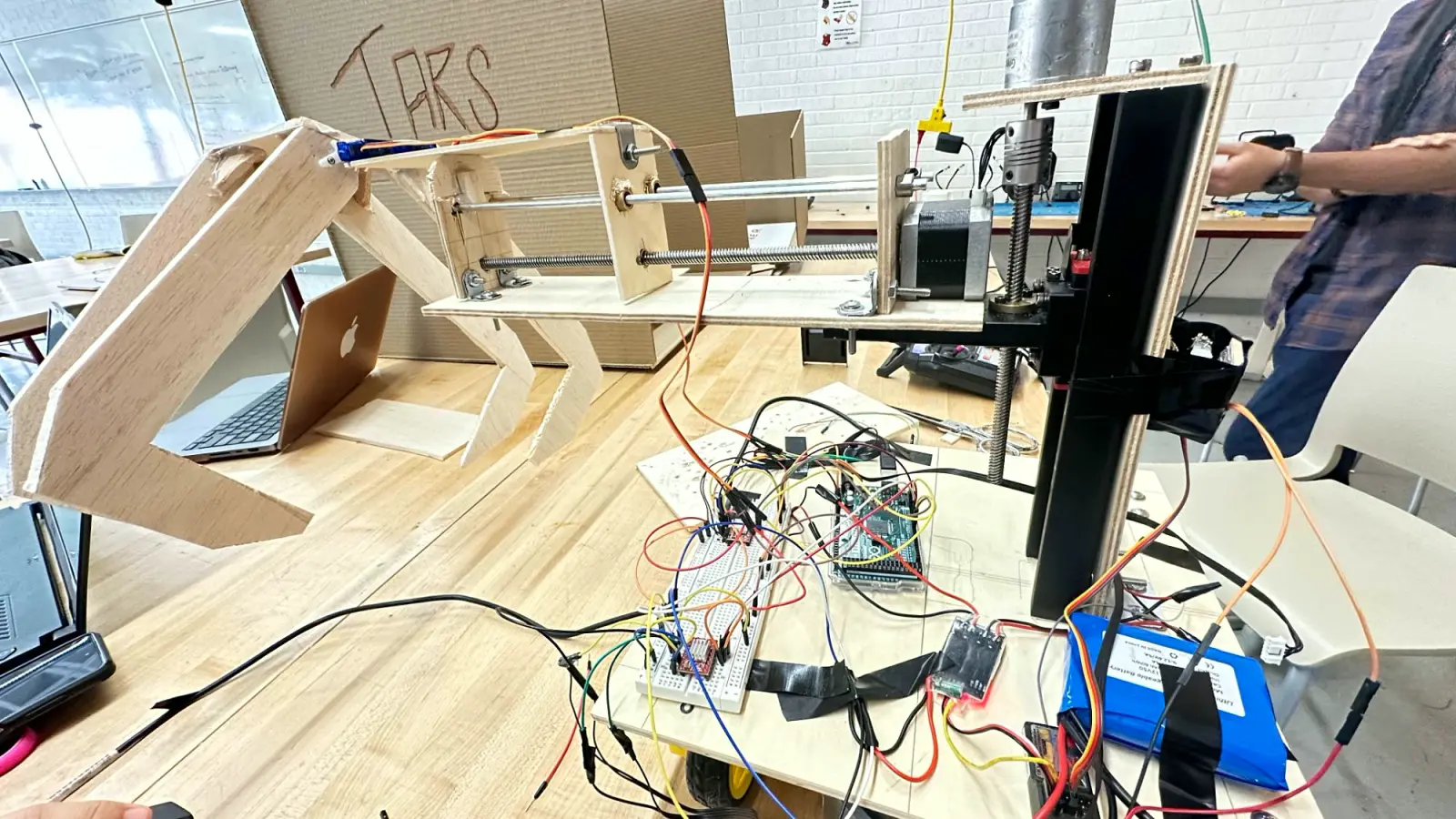
A robot on a cart that does all four jobs, and watches itself work.
- A motor opens the chamber.
- A vacuum clears the loose powder.
- A gripper lifts the part out.
- A camera checks each step.
- A live dashboard shows it all.
It sees every step
A live dashboard shows the camera and the machine’s state.
- Door
- Open or closed
- Suction
- On or off
- Temperature
- In °C
- Vacuum pressure
- In kPa
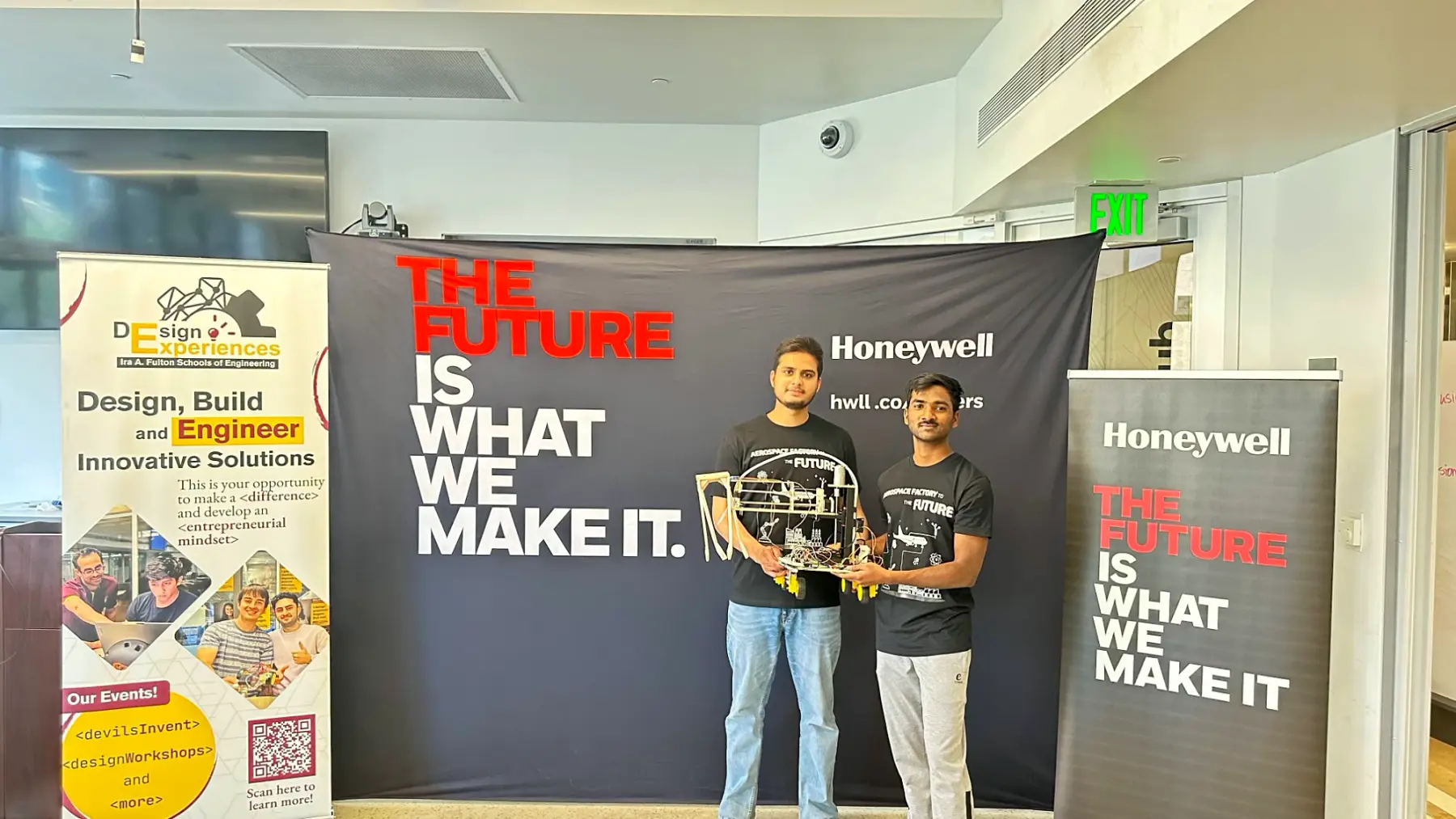
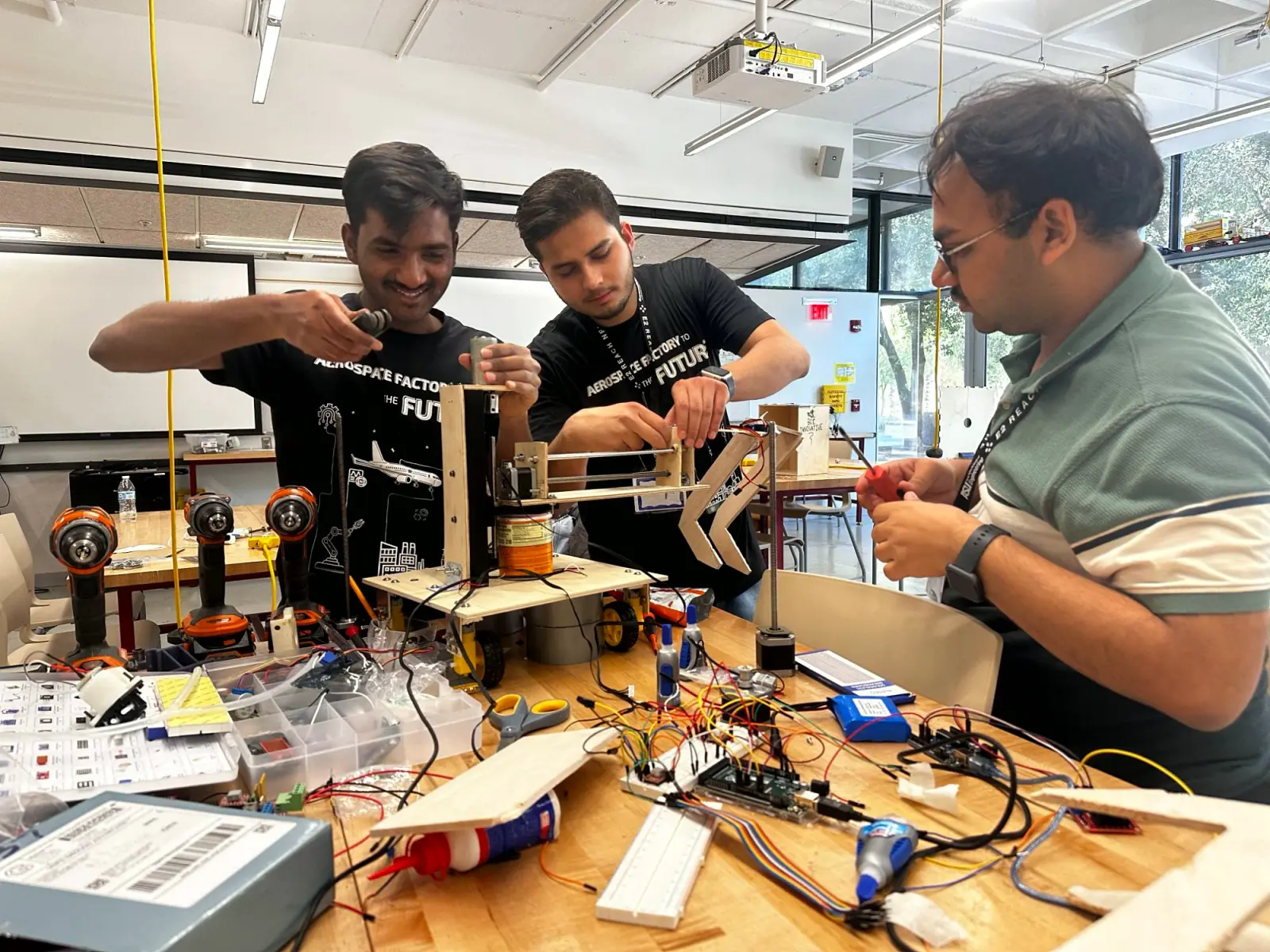
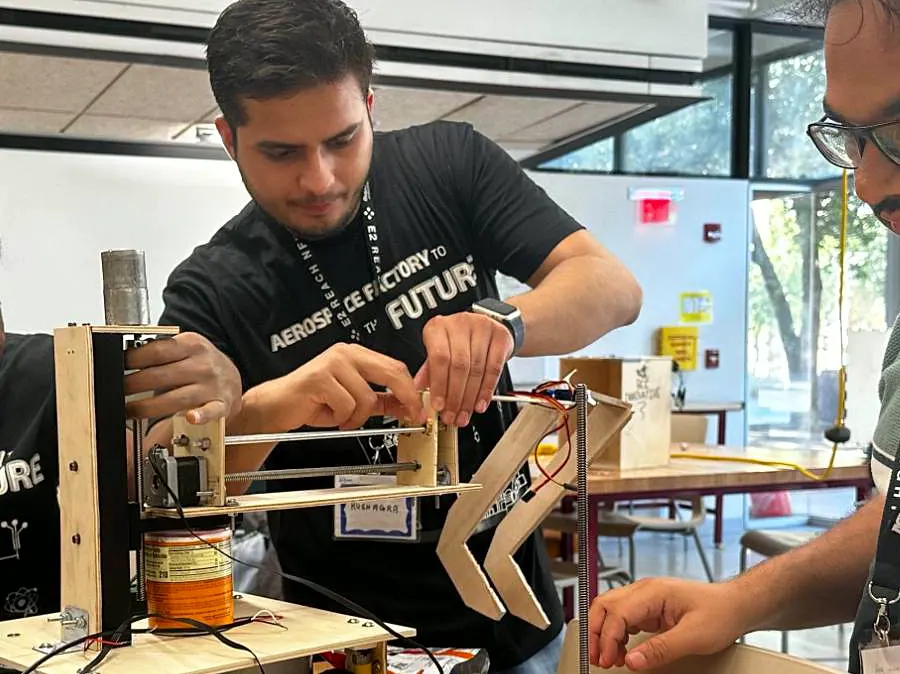
We built it for real
Wood, wires, an Arduino and a lot of glue.
What’s inside
- Wooden frame on a wheeled cart
- Stepper motors on lead screws
- Servo gripper
- Vacuum hose
- Arduino, breadboard and battery
- Camera for the dashboard
The benefits for Honeywell
The same cleanup, done by the robot.
-
About twice as fast
15 to 20 min a cycle, down from 30 to 60.
-
No one in the dust
A sealed vacuum keeps powder out of the air and away from lungs.
-
Over $350,000 saved
in the first year, for 5,000 cycles.
Side by side
By hand
- Each cycle
- 30 to 60 min
- Staff
- 1 to 2 trained operators
- Safety
- Powder in the air, tired hands
- Growth
- Needs more skilled people
- Records
- On paper, or none
- Parts
- Often damaged
With the robot
- Each cycle
- 15 to 20 min
- Staff
- None on the job
- Safety
- Sealed vacuum, no dust
- Growth
- Add it to more machines
- Records
- Logged by the dashboard
- Parts
- Gentle, the same every time
Team estimates from the project deck.
The first year
$7,350
with the robot, against $360,000 or more by hand, for 5,000 cycles.
| Cost | By hand | Robot |
|---|---|---|
| Labor | $350,000 | $5,000 |
| Lost powder and scrap | $10,000 | $1,000 |
| Motor and servo upkeep | Small | $1,000 |
| Setup, once | None | $350 |